Factory Selection & Price Comparison
You send a specification. We put it in front of two or three mills that can actually run it, and compare what comes back — price, lead time, payment terms, and how their last batches behaved.
What we check before a factory enters our list
| Criterion | What we look for | How we confirm it |
|---|---|---|
| Capacity and lead time | A press line and finishing capacity that match your volume, and a lead time the mill will put in writing | Mill production schedule and current order book, asked per order — not a brochure figure |
| Press and sanding equipment | Continuous or multi-opening press, calibrating sander, edge trimming — the equipment that decides thickness tolerance | Equipment list from the mill, then the tolerance itself measured on a sample |
| Recent quality records | Internal test data for the same thickness and grade you are buying | Last three to six months of mill QC sheets for that specification |
| Certificate authenticity | A certificate number that exists at the issuing body, for that mill and that product scope | Checked against the issuing body registry and compared with the number on the mill's copy |
| Grade stability batch to batch | E0/E1/E2 or CARB marking that stays the same across production runs | Grade marking compared on panels from two different batches |
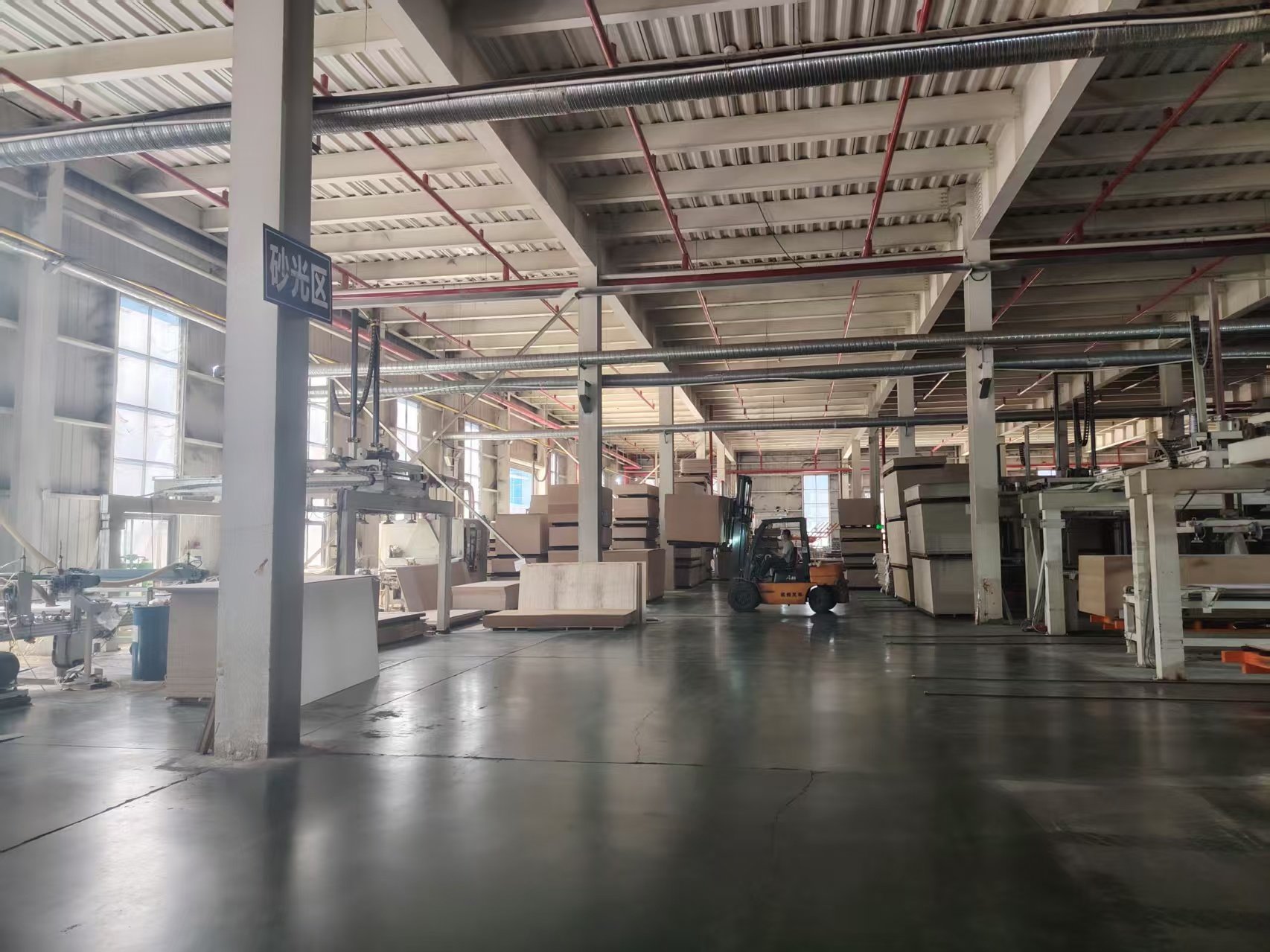
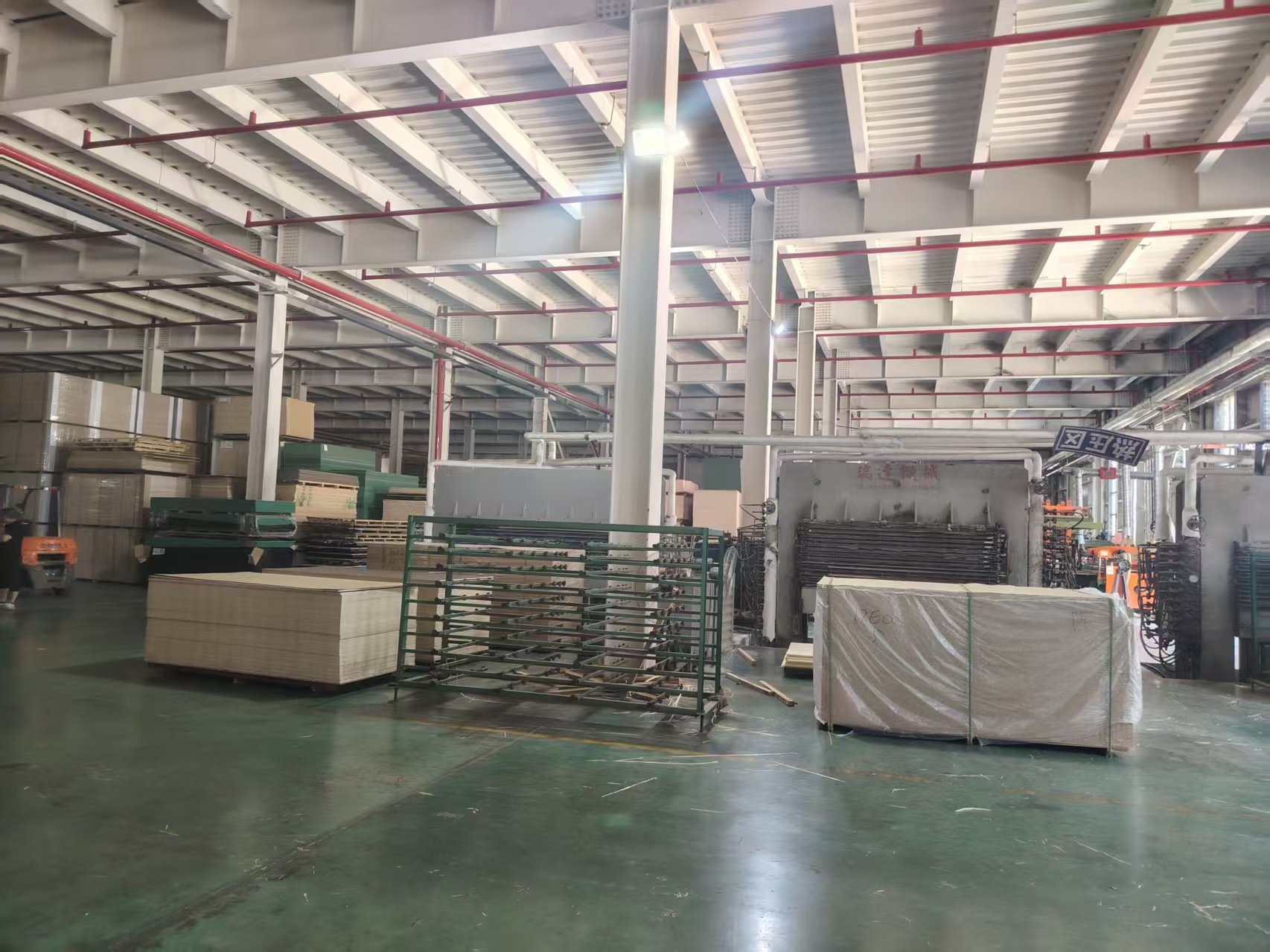
On the floor at the mills we vet
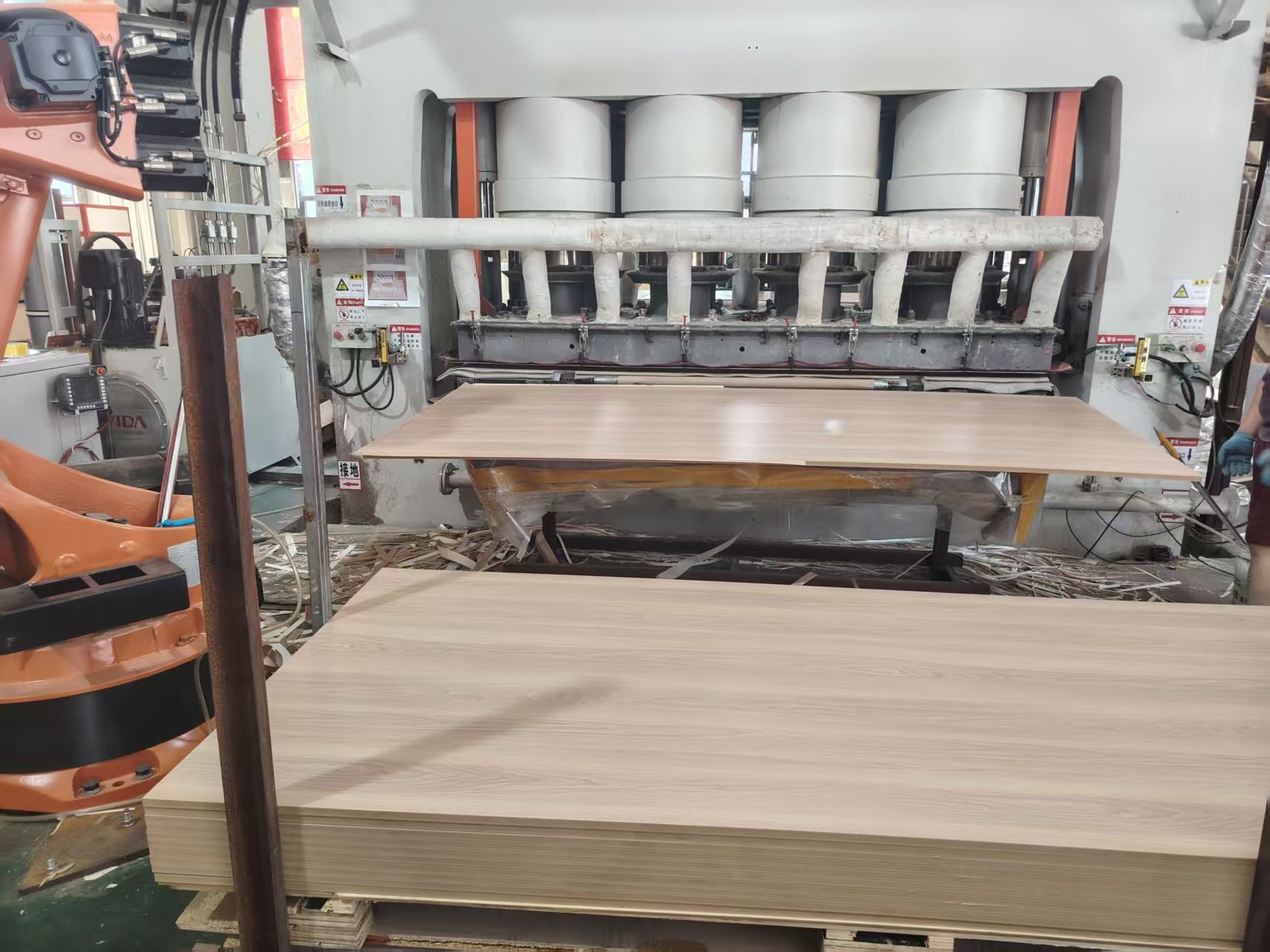
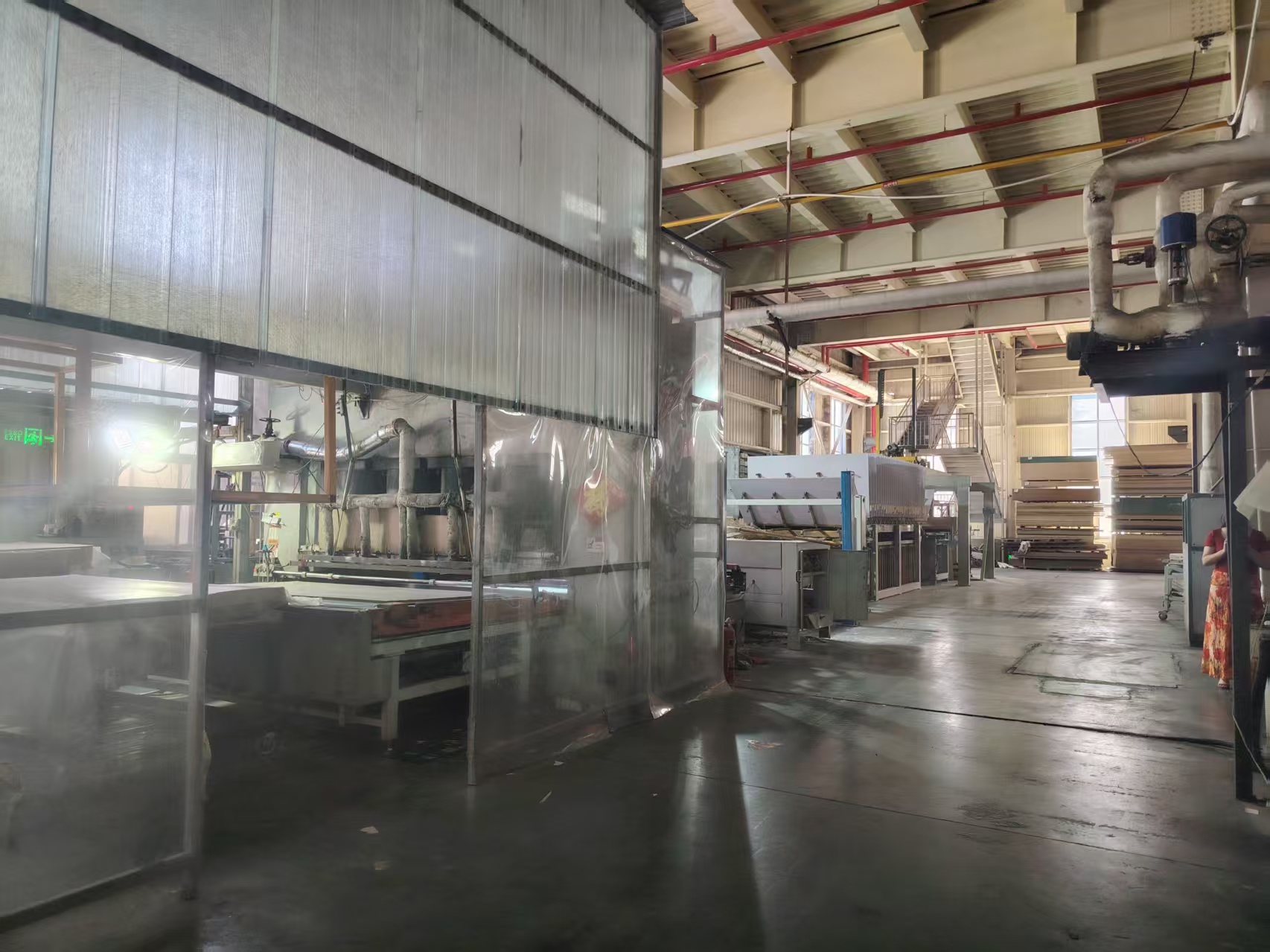
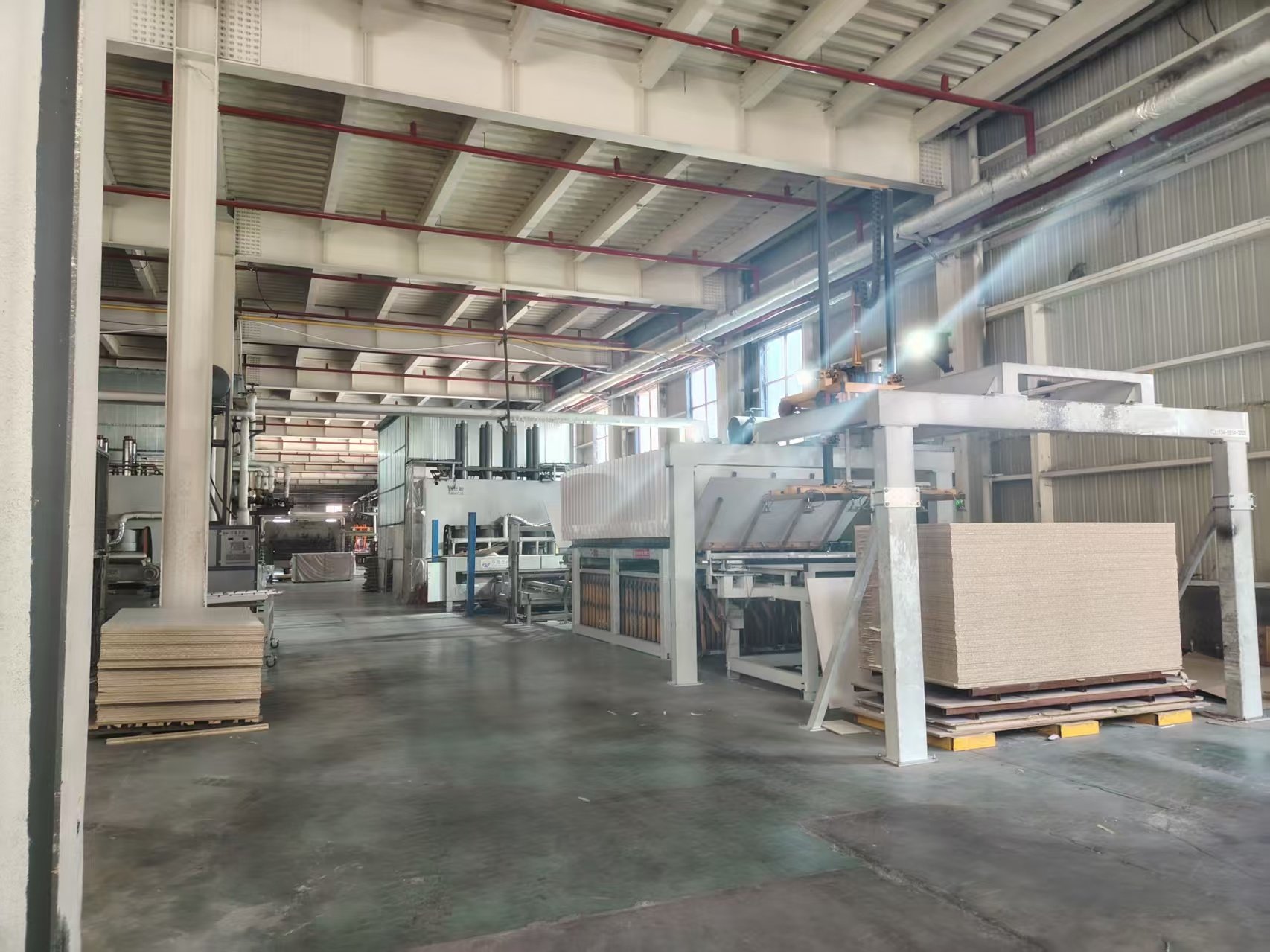
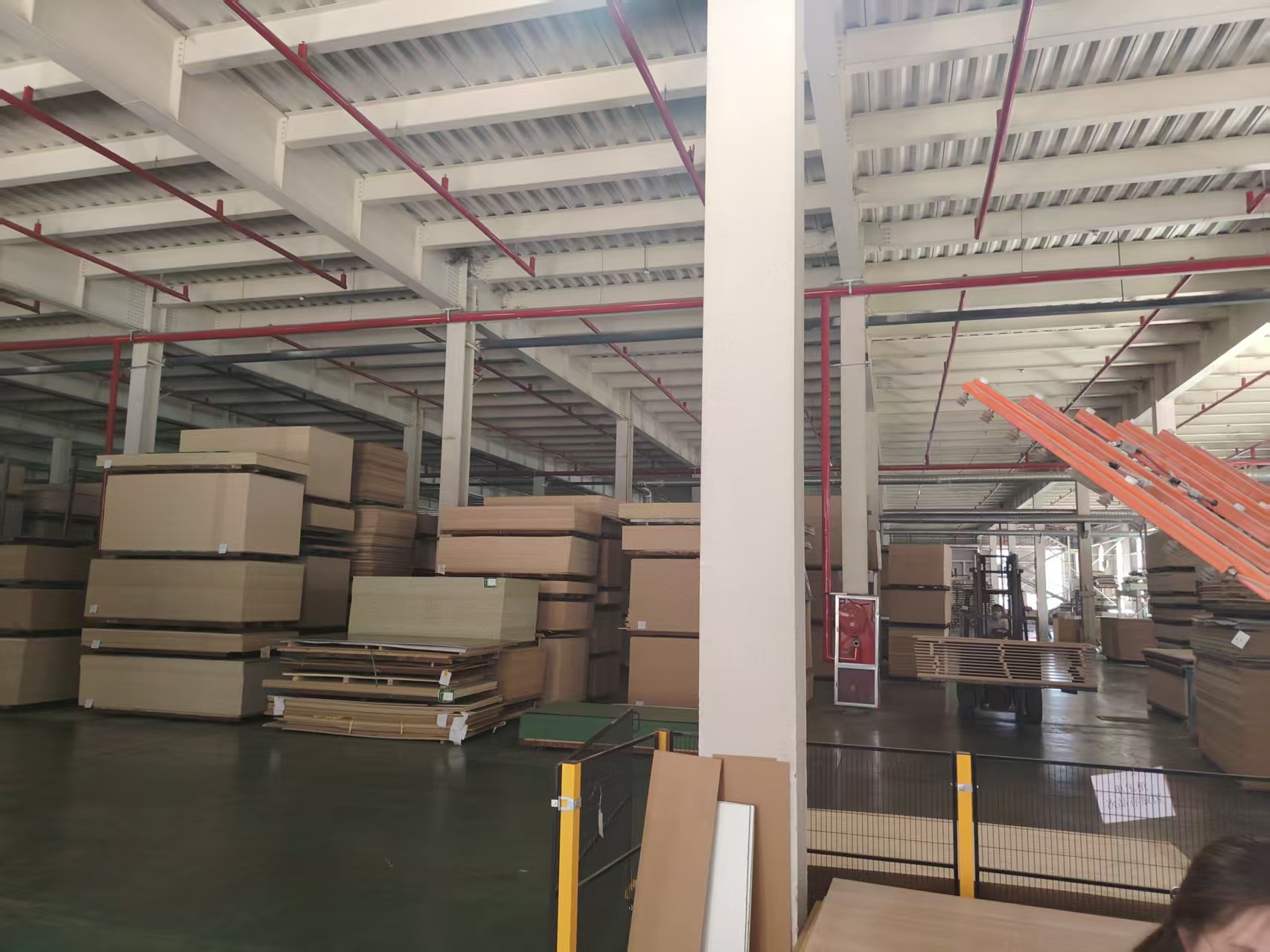
Photos from our own mill visits and pre-loading checks — press lines, sanding sections and board stock, taken while checking the mill that would run your order. Not stock photos, not brochure images.
How a real price comparison looks
The table below is illustrative — it shows the shape of the comparison you receive, not current prices. Your own table is filled with real quotations for your specification.
| Mill | Ex-works price, 18mm E2 MDF | Lead time | Payment terms | History with us |
|---|---|---|---|---|
| Mill A | USD 195–210 / m³ | 18–25 days | 30% deposit, balance before loading | Two previous orders; one thickness issue corrected before the second loading |
| Mill B | USD 205–225 / m³ | 12–18 days | 30% deposit, balance against B/L copy | Clean on the last three loads |
| Mill C | USD 185–195 / m³ | 25–35 days | 50% deposit | No previous order with us; not yet audited |
Illustrative only. Prices are ranges because mill prices move with resin, wood fibre and order volume; the numbers in your quote are the ones that apply.
Why this gets you a better price than buying direct
Three reasons, and none of them is a secret discount.
- Several quotes, not the first one. A mill quotes once. We quote the same specification three times and can see which cost line is out of line.
- Volume in the same month. Panels for two or three buyers can be scheduled into the same production window, which is worth more to a mill than a single container.
- We know where the money is. Film weight, glue type, sanding passes, packing and pallet height all move the price. We ask for the version that fits your use, not the most expensive one.
Pre-shipment Inspection
The goods are checked at the mill or at the loading warehouse, against the specification in your proforma invoice, before the container is sealed. You get the report and the photos first.
What we inspect
| Check | How it is done | What counts as a pass |
|---|---|---|
| Thickness and dimensions | Micrometer at three points per sheet, three to five sheets per pallet | Within the tolerance written in your PI |
| Moisture content | Pin or hand-held meter, reading taken per batch | Inside the range the mill declares for that grade |
| Density | Weighed and compared with the mill test data for the same batch | Matches the declared density for the grade you ordered |
| Surface quality | Bubbles, scratches, colour difference, edge chipping, inspected under the warehouse light | No defect beyond what your approved sample shows |
| Formaldehyde grade marking | Marking on the panel edge and on the packaging, compared with the order | Matches the E0/E1/E2 or CARB grade ordered |
| Packing and pallets | Corner protection, wrapping, strapping, pallet condition | Fit for a sea voyage and for your unloading equipment |
The report you receive
One page per order: batch information, the sampling ratio used, the result of each check, and the photos from the loading bay. It is sent to you before the container is sealed, so a rejection still costs you nothing but time.
Pre-shipment inspection report — sample available on request, customer and mill names masked.
What happens if inspection fails
The container is not loaded. That is the first and only automatic consequence.
Then we go back to the mill: either the failing batch is reworked or replaced, or the order moves to another mill from the comparison. The cost of that, and the argument behind it, stays between us and the mill — it is not passed on to you, and you are not asked to accept a discount for goods you did not order.
You receive the failed report with its photos, then a decision, then a new loading date. No compensation formula is published here because none is agreed yet; what is fixed is the sequence: nothing non-conforming gets on the ship.
Container Loading & Mixed Loading
One container, several factories, several products
Panels from two or three mills are brought to one loading point near Qingdao and loaded in a single pass. Panels can be mixed with panels; small hardware items can travel with them when the buyer asks.
The packing list is written per mill and per product, so your customs broker can see what came from where. You get one bill of lading for the whole container instead of three, and one set of destination charges instead of three.
Every load is photographed
- Empty container: floor, side walls and door seals, before anything goes in. A wet or damaged box is rejected at this point.
- Stacking: layer by layer, with moisture barrier paper and desiccant placed where the voyage needs it.
- Securing: strapping and bracing, so the load cannot shift in heavy weather.
- Seal: the door is closed and the seal number is photographed, then sent to you with the documents. The number on the photo is the number on the B/L.
A photo record is kept for every order and every container. If a claim ever comes up, that record is the first thing we look at.
Export Documents
Documents we prepare for every shipment
| Document | What it is for | Where it applies |
|---|---|---|
| Invoice & Packing List | Customs value, and the per-mill, per-product packing detail | Every market |
| Certificate of Origin (CO) | General origin proof, often needed for duty assessment and by the buyer's bank | Every market |
| Form E | Tariff preference under the China–ASEAN free trade arrangement | Vietnam, Indonesia, Thailand, Malaysia and other ASEAN destinations |
| Form A (GSP) | Preferential origin where the destination still accepts the GSP scheme | Destination-specific — confirmed per shipment |
| Fumigation Certificate | Confirms wood packaging (pallets, crates, dunnage) has been treated | Standard practice for wood packaging; some destinations ask for it by name |
| Phytosanitary Certificate | Plant-health certificate for wood products | Only where the destination requires it — confirmed with your broker |
| Bill of Lading | The title document: telex release or original set, as you instruct | Every market |
Requirements change and differ by port, not just by country. We confirm the document list against your destination before booking, and we do not promise a document we cannot obtain for that shipment.
17 years of clean paperwork
Exporting wood panels since 2009 — we know which documents your customs broker will ask for, and which ones are a waste of your money.